Vietnamese Etiquette in Ho Chi Minh City: 8 Essential Tips
Vietnamese Etiquette in Ho Chi Minh City: 8 Essential Tips
Ho Chi Minh City is a lively destination where modern city life meets long-standing Vietnamese traditions. For international visitors, understanding Vietnamese etiquette in Ho Chi Minh City can make everyday interactions easier and help create a more meaningful travel experience.
You do not need to know every local custom. A friendly attitude, a little cultural awareness and respect for the people around you are good places to start.
Here are eight practical tips to help you experience the city with confidence.
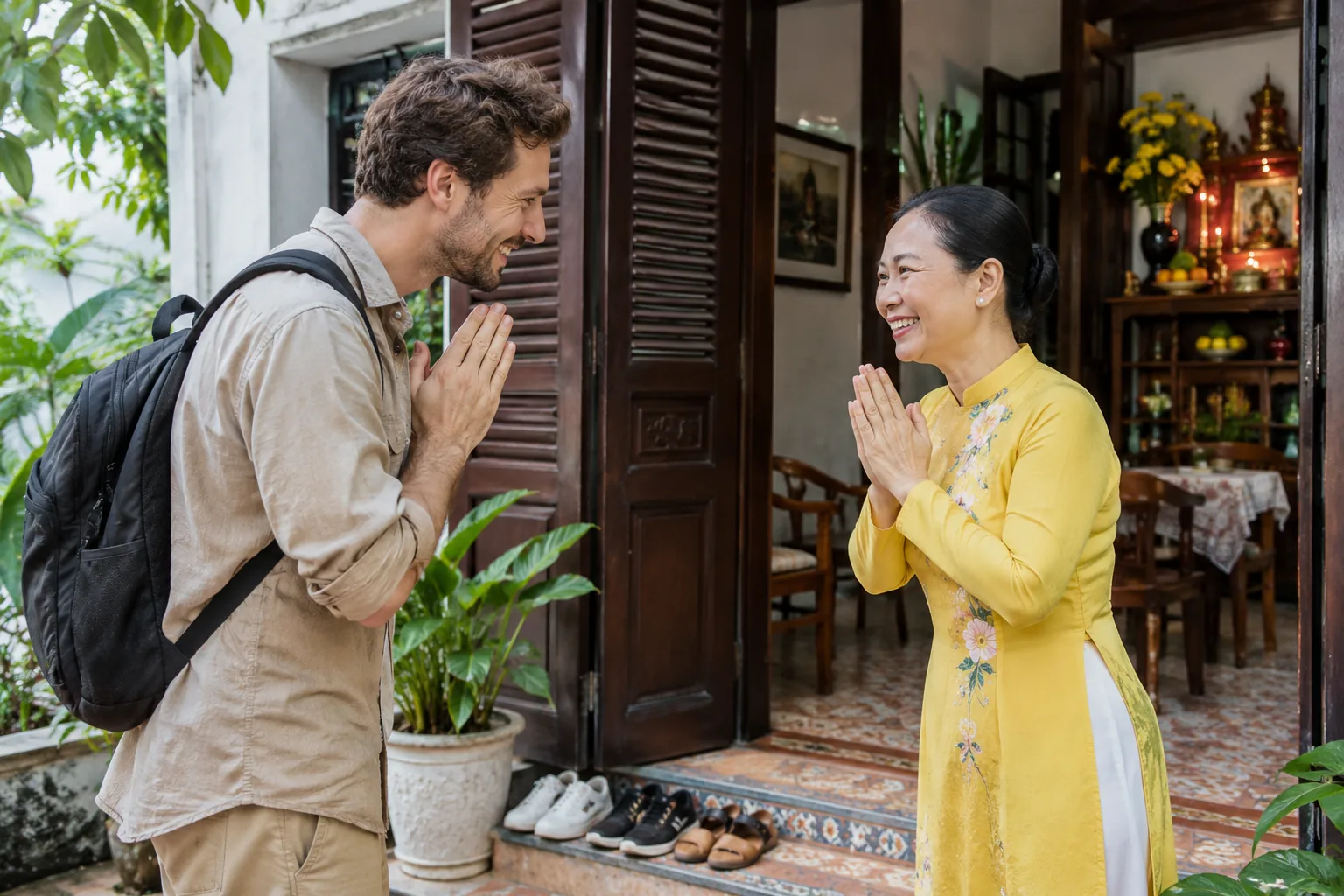
1. Vietnamese Etiquette Begins with Respectful Greetings
Vietnamese forms of address often reflect age, familiarity and social relationships. Instead of using one word for everyone, people commonly use different terms depending on the other person’s age and gender.
Some expressions you may hear include:
- Anh: commonly used when addressing a man slightly older than you.
- Chị: commonly used when addressing a woman slightly older than you.
- Em: commonly used for someone younger.
- Cô / Chú: commonly used for adults around your parents’ generation.
- Ông / Bà: respectful terms for older men and women.
As a visitor, you can simply say Xin chào (hello) and Cảm ơn (thank you). A warm smile and polite tone are always appreciated.
2. Stay Calm and Avoid Public Confrontation
Maintaining harmony and avoiding public embarrassment are important aspects of Vietnamese social interaction.
If a misunderstanding occurs, try to remain calm and speak politely. Raising your voice, openly criticizing someone or creating a public confrontation may make the situation uncomfortable for everyone.
This does not mean you should avoid raising a concern. If you experience a problem, explain it clearly and respectfully. A calm conversation is usually a more constructive way to find a solution.
3. Dress Respectfully at Temples and Pagodas
Ho Chi Minh City has several temples, pagodas and religious sites that visitors can explore.
When visiting these places, choose modest clothing that covers your shoulders and knees. Remove your hat and shoes when requested, and follow any signs or instructions at the entrance.
Keep your voice low and avoid disturbing people who are praying. Do not touch religious objects or enter restricted areas.
These simple practices show respect for the spiritual significance of the place.
4. Understand Vietnamese Dining Etiquette
Sharing food is an important part of many Vietnamese meals. Dishes are often placed in the middle of the table so everyone can enjoy them together.
When dining with local people, keep these points in mind:
- Wait until the host or other guests are ready before beginning a shared meal.
- Take a reasonable portion and leave enough for others.
- Use serving utensils when provided.
- Pass dishes carefully, using your right hand or both hands when appropriate.
- Never leave chopsticks standing upright in a bowl of rice, as this resembles incense offerings associated with funerals.
If you are unfamiliar with a dish or unsure how to eat it, simply ask. Local hosts are often happy to explain.
For more dining ideas, explore our guide to restaurants in Ho Chi Minh City.
5. Follow Local Customs When Visiting a Vietnamese Home
If you are invited to a Vietnamese home, look for shoes placed near the entrance. Many families prefer visitors to remove their shoes before entering.
You may also notice a family altar inside the home. These spaces are associated with ancestor worship and family traditions.
Avoid placing personal belongings in front of an altar, touching its objects or blocking the space. Follow your host’s guidance if you are unsure where to sit or what to do.
A small gift, such as fruit or a box of cakes, can also be a thoughtful gesture when visiting someone’s home.
6. Ask Permission Before Taking Photographs
Street markets, neighborhoods and everyday life in Ho Chi Minh City offer many interesting photo opportunities.
However, always ask permission before taking close-up photographs of people, especially vendors, workers, children or individuals in private settings.
You can ask:
Chụp hình được không? – May I take a photo?
Be particularly considerate around religious ceremonies and family activities. Some attractions also have their own photography restrictions, so check before taking pictures.
7. Use Gestures with Consideration
Body language can carry different meanings across cultures. In Vietnam, it is generally polite to avoid pointing directly at people or touching someone’s head.
When passing an item to another person, using your right hand or both hands is a considerate gesture, particularly in formal situations or when showing respect to an older person.
If you are unsure about a gesture, observe the people around you and follow their lead.
8. Keep an Open Mind and Respect Local Differences
Ho Chi Minh City is busy, diverse and constantly changing. Visitors may encounter unfamiliar customs, different communication styles and daily routines that differ from those at home.
Approach these differences with curiosity rather than judgement. A polite question, a smile or a simple Cảm ơn can help create a positive interaction.
Understanding Vietnamese etiquette in Ho Chi Minh City is not about memorizing a strict list of rules. It is about showing consideration for local people, traditions and everyday life.
Discover Ho Chi Minh City with Respect
Whether you are enjoying a shared meal, visiting a pagoda or exploring a local neighborhood, cultural awareness can make your journey more rewarding.
For further reading, visit Vietnam Tourism’s guide to Vietnamese etiquette and explore local visitor information at Visit Ho Chi Minh City.
You can also plan your journey with our practical guide to transportation in Ho Chi Minh City.
Travel with curiosity. Respect local culture. Discover Ho Chi Minh City.


